
News & Events
Financial Accounting Vs Managerial Accounting: Key Differences and Examples

These accountants especially focus on the costs of products or services purchased by the company as well as its actual results vis–vis its various budgets, in order to quantify the company’s plan of operation. Expenses and variances are also involved in this process which also brings a rapid improvement in financial management. But the entire credit goes to the managerial accountants who assess the cost system and deliver relevant information to CFOs for creating a fabulous output. Managerial accounting isn’t a typical accounting service when compared to financial accounting. It covers the wider aspect of management does managerial accounting follow gaap and focuses on analyzing, interpreting, and passing on financial information to higher management through prompt communication. Additionally, this branch of accounting plays a managerial role in a company for better internal decision-making.
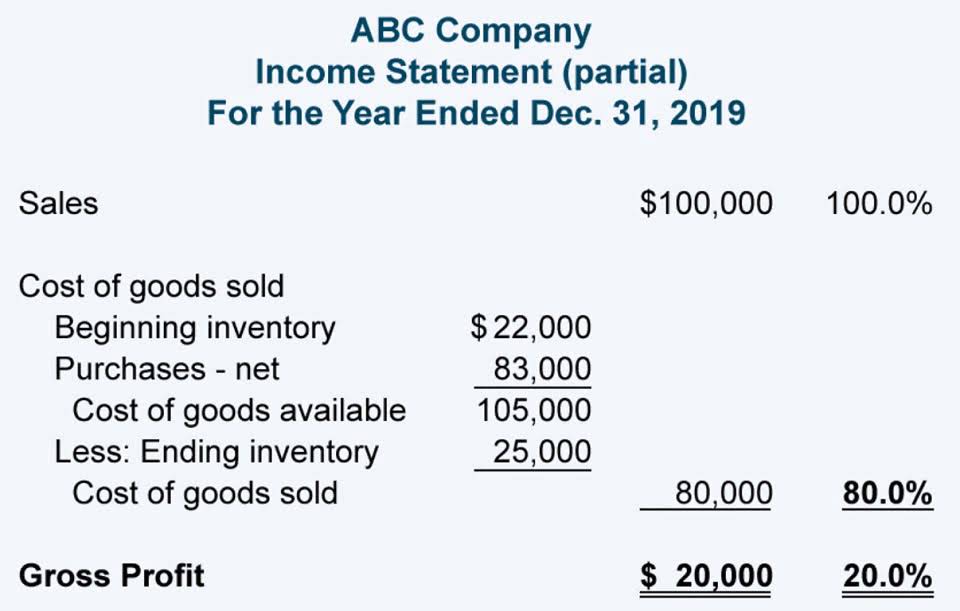
What is Inventory Valuation and Product Costing?
GAAP stands for generally accepted accounting principles, which set the criteria for preparing, presenting, and reporting financial statements in the U.S. CVP analysis examines the relationships between costs, volume, and profit to determine the breakeven point and assess the impact of sales volume or pricing changes on profitability. This technique helps managers make informed decisions regarding pricing strategies, product mix, and cost control measures.

Forecasting
The role of management accounting is extremely significant in planning, decision-making, and controlling operations. In contrast with financial accounting, which looks after the needs of the outside entities, management accounting supplies the internal managers with the proper tools to make an educated decision about the business. Management accounting keeps its focus on budget preparation, forecasting, cost control, and adjusting entries performance analysis to increase efficiency and steer toward strategic objectives.
Target Costing
Managerial accounting is not governed by external regulations, such as GAAP, allowing organizations to meet their needs and circumstances. In summary, management accounting is an essential tool for managers in an organization to make informed business decisions and to plan for future business operations. Constraint analysis is a must that experts have to consider important in management accounting. In this analysis, an accountant reviews the constraints and evaluates the weak points and drawbacks that become hurdles in growth. Therefore, an accountant comes up with a logical analysis after calculating the revenue, profit, and cash flow system. However, this analysis always brings an improvement in sales and allows managers to make perfect decisions.
Managerial accounting and financial accounting have different functions in a business. While managerial accounting is concerned with internal decision-making, financial accounting is concerned with external reporting. Understanding their differences assists organizations in applying both to control and report financial performance.
- Controlling focuses on monitoring performance, comparing results with plans, and taking corrective actions.
- Developed to provide consistency, transparency, and comparability in financial statements, GAAP ensures that businesses adhere to a standardized set of rules and guidelines.
- As part of its role in costs, the managerial accounting team may use a technique known as activity-based costing to properly assign costs to a product.
- Financial accounting focuses on creating financial statements for external stakeholders.
- The overall efficiency and profitability of the company are reported in the financial accounting reports.
Time Orientation
As the emphasis in managerial accounting is to help organizations improve operational efficiency and decision making, it involves more detail than simple financial statements provide. There is flexibility in reporting which allows more customization in data presentation. Managerial accounting requires both financial and non-financial information for a more forward-looking view. Forecasts, budgets, and performance evaluations are often used to support planning, controlling, and prioritization. The adaptability enables organizations to respond to their unique challenges and opportunities, contrasting Outsource Invoicing with the compliance-driven nature of financial accounting.

Managerial Accounting: Key Techniques and Decision-Making Tools
- Financial accounting gathers and summarizes data into standardized reports for external use, whereas managerial accounting focuses on thorough, real-time data analysis for internal use.
- The roles assist managers to plan future actions, to track past performance, and to control operations.
- By analyzing variances, managers can pinpoint areas where actual results differ from expectations and take appropriate corrective actions.
- Budgeting is one of the most important aspects of what is budgeting in management accounting.
- Following financial accounting principles and recording financial transactions systematically makes it easier to comply with the law and avoid any costly mistakes.
Managerial accounting reports on what is causing a problem and how to fix that problem. It mandates that revenues and expenses be recorded when they are earned or incurred, regardless of when cash is exchanged. This method provides a more accurate and comprehensive picture of a company’s financial health compared to cash accounting.
Create a free account to unlock this Template
Managerial accountants earn a great living, averaging about $95,659 annually across the US4. This number varies by location and seniority; however, with the national salary nationwide at just $59,428 per year5, you can expect a competitive pay rate even in an entry-level position. Access and download collection of free Templates to help power your productivity and performance.
What is Margin Analysis?
- Indeed, it improves the decision-making of organizers allowing them to cut down expenses and boost profitability.
- At the same time, short-term perspectives are essential for day-to-day operations but may not fully address long-term strategic considerations.
- Small businesses or organizations with limited resources may face challenges implementing comprehensive managerial accounting systems.
- It gives you insights into different aspects of your business, such as cost behavior, profitability, and cash flow, which can help in analyzing how different decisions might affect your financial health.
- Another benefit is supporting ongoing adjustments to the strategic plan based on real-time data.
- Managerial accounting involves the step by step analysis of various events and operational metrics by managerial accountants in order to facilitate the translation of the data into serviceable information.
The IRR is usually compared to the business’s hurdle rate, which is the minimum rate of return the business would accept. The IRR can easily be calculated with a financial calculator or an excel spreadsheet. Constraint analysis is concerned with identifying limiting factors in a system and working to eliminate them.